
Teak Glulam
Our structural beams, columns, and panels are made from recycled teak offcuts from furniture manufacturing. The teak is finger-jointed and laminated into full-size structural timber, combining strength, dimensional stability, and the natural appearance of teak.
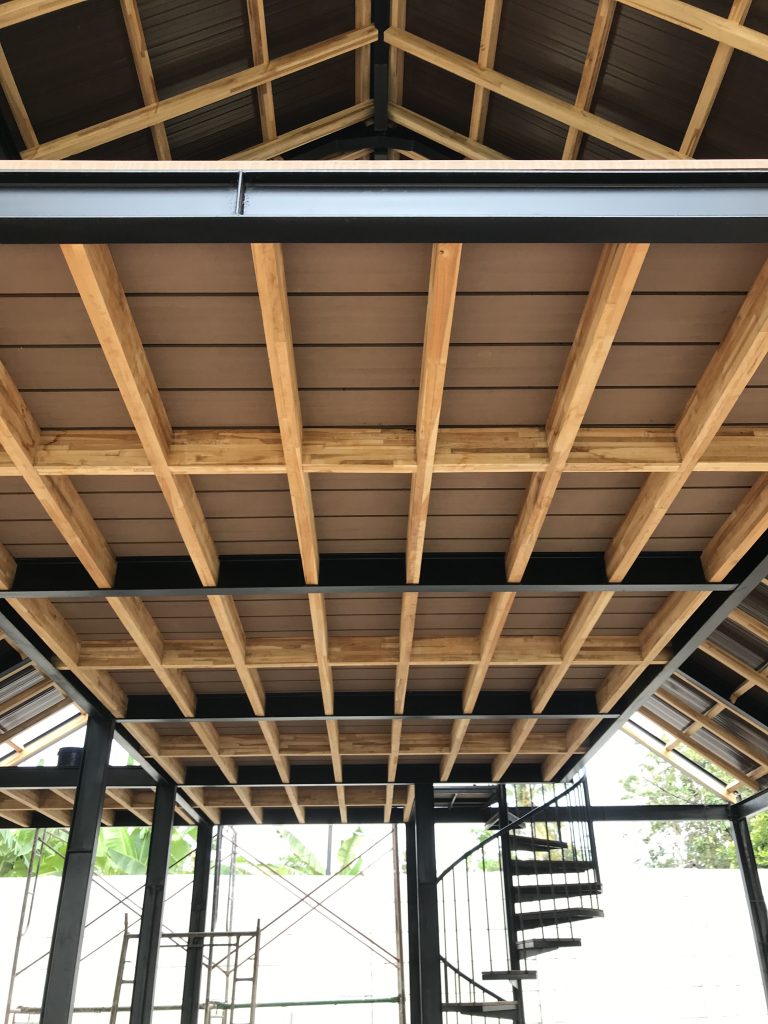
Teak Glulam joist installed in Mila Villa project Metes
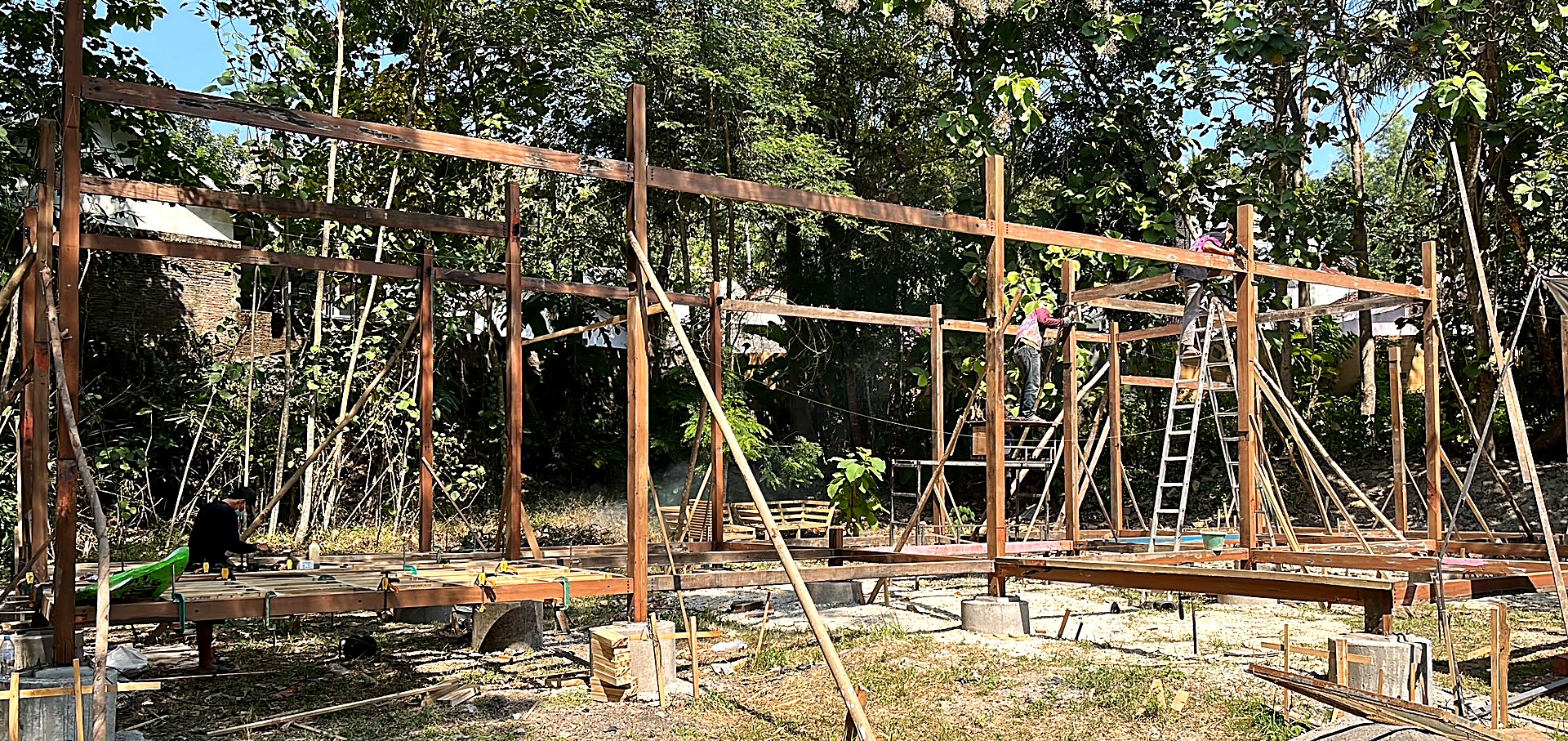
Our Mila resort with Teak glulam frame under construction — pedestal foundation, no steel beams.
A Circular Use for Recycled Teak
Rather than sourcing new-cut timber, our glulam production runs on teak offcuts that would otherwise go to waste from furniture production, plus reclaimed teak from other sources. Short, irregular pieces are finger-jointed into long, structural-grade lengths, then laminated together under pressure into glulam beams. Any resulting sawdust feeds directly into our bio-composite production line, so very little of the input material is lost.
Glulam Beams
Our glulam beams are available in sizes up to 190 × 190 mm and lengths up to 6.2 m. Beams are laminated under 0.8–1.2 N/mm² clamping pressure and finger-jointed using a 12mm profile. They’re used as structural beams, columns, and as joists for the substructure of our bio-composite decking.
Why Glulam?
Prefabricated glulam construction offers a faster build compared to poured concrete. Glulam beams are manufactured under controlled factory conditions and arrive ready for installation, reducing on-site labor and construction time. The engineered, laminated construction also provides greater dimensional stability than solid-sawn teak, which is more prone to movement caused by humidity changes in tropical climates.
Applications
Structural beams and columns for villas, resorts, and other timber-frame buildings, as well as glulam joists used as a substructure for our bio-composite decking systems. Mila Villa, our own prefabricated modular villa brand, uses teak glulam as its primary structural frame — see it in the photos below.
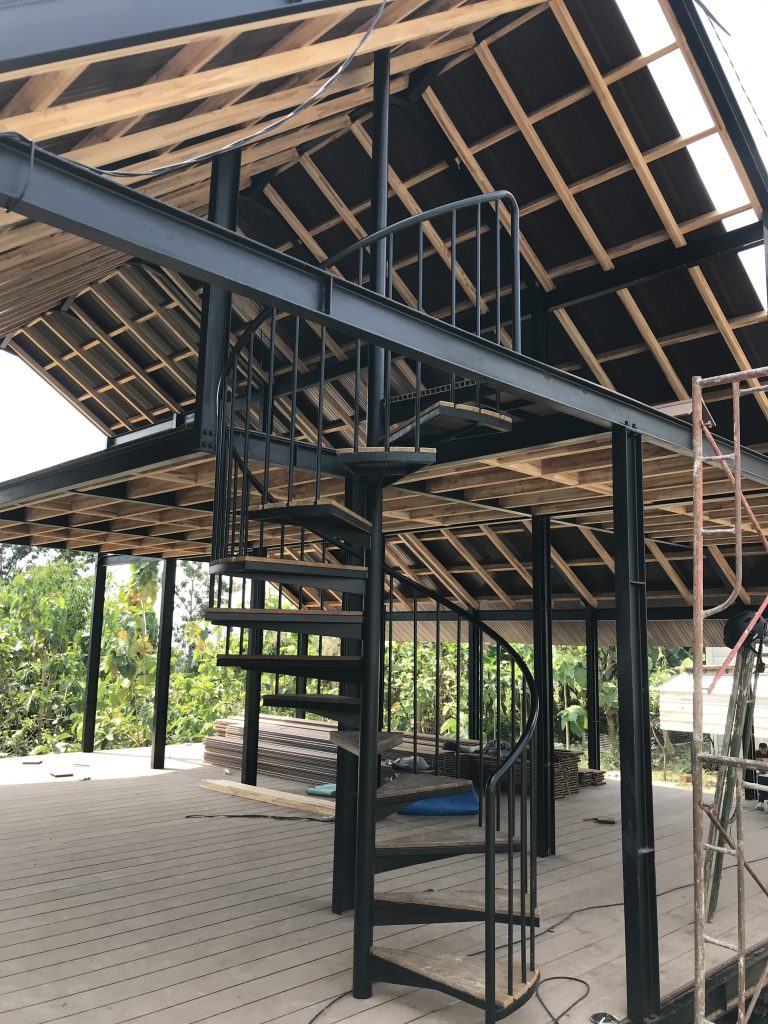
Teak Glulam support joists in Mila Villa project Bibis

Teak Glulam support joists in Mila Villa project Bibis